Why Does my Hen’s Comb Look Pale?
Does your chicken have a pale comb? It could because of a simple reason or your chicken may have some health concerns. Let’s look at why your chicken might have a pale comb.
What is a Chicken Comb and What is it For?
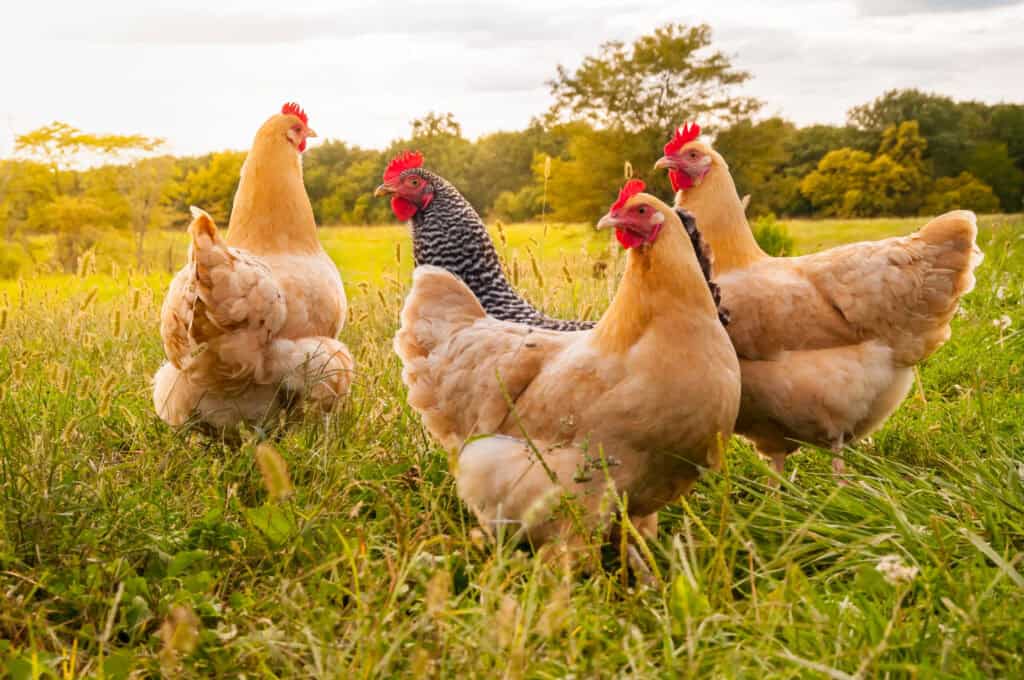
Chickens and some other poultry have a fleshy red part (sometimes black) on the top of their head called a “comb”. It usually starts where the top of their beak ends and stretches up over the top of their heads. Interestingly, chickens do not sweat. That is where their comb and another part of their body called “wattles” come in. They allow a hen to release body heat through these tissues.
Some combs are much larger then others, with roosters usually having the largest and showiest looking combs. On our farm we purposely select chicken breeds that have very small combs, as Minnesota winters can cause frostbite on the larger ones.
Are There Different Kinds of Combs?
Yes! A single comb is the most common type of comb, though they can also have double combs, pea combs, buttercup combs, and more! Check out this article from the British Hen Welfare Trust for some great illustrations of types of chicken combs.
What Do Healthy Combs Look Like?
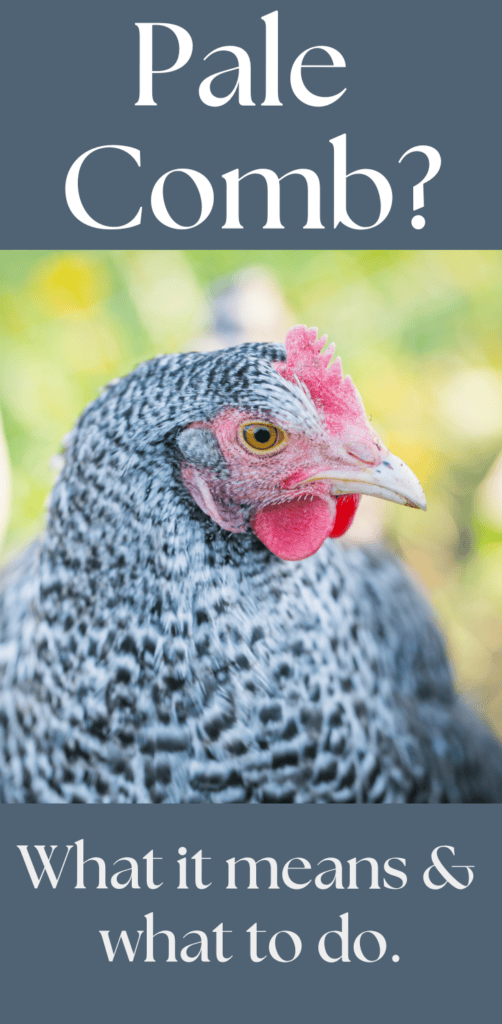
A healthy chicken comb should be red, plump, and almost waxy looking. A chicken’s comb will change with age, and the comb of an old hen will look less vibrant than a hen that is only a few months old. Combs also will typically get a little larger with age.

What Does a Pale Comb on a Chicken Mean?
I am not a veterinarian and this article is informational only. Read my full disclosures here.
Molting
The most common thing a pale comb is an indicator of, is a chicken who is not currently laying. This is common to see during a molting period. When chickens molt, they loose many of their feathers so their body can replace new, healthy ones that are better at insulating the bird, protecting her, and giving her a small amount of flight ability. While a chicken’s body is busy growing new feathers, it is using most of its energy reserves to grow them. This pulls blood and proteins from her comb, giving it a pale look.
This is nothing to be worried about and you should expect to see her comb brighten back up after her new feathers have grown in. You will also notice that when chickens are molting, they are typically not laying any eggs. Again, this is because all their energy reserves are going towards growing in new, healthy feathers.
Age
As chickens age and their egg production slows down, their comb will often get more pale and a little dry looking. It is simply something that happens with age and isn’t too big of a concern. If you are looking to cull older hens from your coop, a pale comb is a good indicator of a bird who is likely not laying anymore.
Parasites
If you have a relatively young hen who is not showing any signs of molting, your chicken might be anemic due to parasites. This means your chicken has worms inside them eating up the nutrients from their food.
You will need to treat your chicken (or chickens if other girls are showing symptoms) with a dewormer. There are several options out there including one you put in their water for five days (Safe Guard) or you can dose individual chickens. If the problem is not wide spread from what you can tell, I would advise treating the individual chicken and not the whole flock. If you see a couple girls with symptoms, then I would dose their water as recommended by whatever dewormer you choose.
Frostbite
If the chicken in question has a large comb and it is a cold winter, a comb might start to turn pale if lightly frostbitten. If the frostbite is severe enough it will turn black and fall off.
Fatty Liver Disease and Lymphoid Leukosis
If you see a chicken with a pale comb and wattles but they appear to be swollen, this could indicate fatty liver disease. This can come from chickens who are overfed and sedentary. Make sure you chickens aren’t getting too much feed, reduce kitchen scraps if they are getting any, offer flaxseed, and provide opportunities for them to exercise.
Lymphoid leukosis relatively unlikely, but this is a virus that can cause tumerous growths inside your chickens. There is not cure for it and it will eventually kill your chicken. If their comb is pale, shriveled, and blueish, this might be the culprit.
Can I Prevent Pale Comb?
As most pale combs are a symptom of molting, so what your girl needs is added protein. A great way to add protein into their diet is with something like Happy Tract, or Black Soldier Fly Larvae. You can also scramble up some of their own eggs and feed them back to them or offer other additional protein in moderation. Aside from boosting their protein, there isn’t really a preventative measure you can take during a molt. It’s just a normal part of their yearly cycle.
Strong Animals for your Flock
One of my favorite companies for supporting overall chicken health is called Strong Animals. It is based here in Minnesota and utilizes herbs, essential oils, and other natural ingredients to help maintain flock health. They have great products for digestive health, dust baths, probiotics, and more. You can use code Farmhouse20 to get 20% off your order.
More from the Coop
- How to Treat Lice in the Chicken Coop
- Top 100 Creative Chicken Names
- What is Chicken Grit and Why they Need It
- The Best Family Friendly Chicken Breeds
Sources
- The Chicken Health Handbook by Gail Damerow
- British Hen Welfare Trust