What is the Best Fertilizer for Growing Daylilies?
Daylilies are a beautiful perennial that can be enjoyed in all garden zones. But what is the best fertilizer to keep the plant healthy and their blooms bountiful? Here is everything you need to know to provide the best care for your daylily.
What is a Daylily?
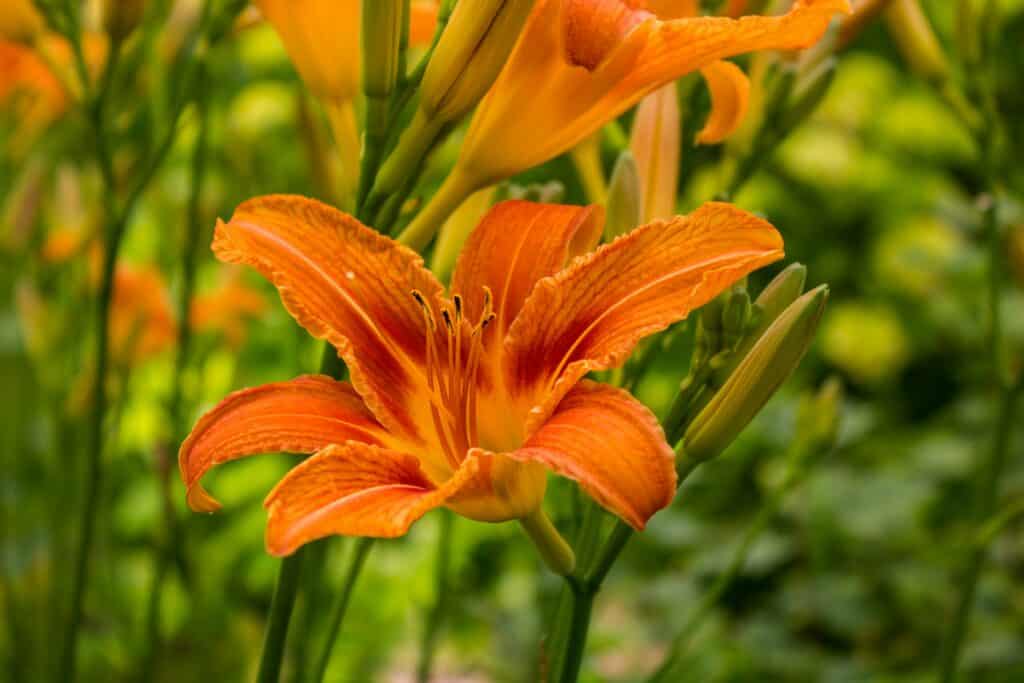
The daylily is a perennial plant grown all over the world, with a history dating back to China over 2,500 years ago. There over 100,000 cultivars of daylilies available. Technically not a true “lily”, they are one of the most popular flowers grown in the United States. They are relatively easy keepers and will last for decades.
The Best Place to Plant a Daylily
Before we talk fertilizer, let’s make sure your plant is in the right location to thrive. You can fertilize your daylily all you want, but if it isn’t planted in the right place to begin with, then your lily will always struggle to perform. Daylilies prefer full sun, although we have a few planted in partial shade and they seem to do well.
I did try planting a few daylilies along the side of our house where it was more shade than sun. This did not work well. For several years, the plants grew thick and bushy, but they never had quite enough sunlight to bring along any blooms. I moved them down to our farm yard where they would get full sun. Within two years they were putting out new growth along with several lovely blooms. We live in Minnesota, right on the edge of zones 3b and 4a.
If you live in a milder climate, your day lilies might perform better in a shadier location.
Lilies prefer well-drained soil, so if you have a dense, clay-type soil then you might need to add soil amendments to loosen it up. Consider adding organic compost, dead leaves, or other organic matter to improve your garden soil. Aside from needing good drainage, daylilies will tolerate a wide range of soil types.
What is the Best Fertilizer for Daylilies?
Thankfully, you don’t need to buy any specialized fertilizer to get the best results from your flowers. Your plant should respond well to a 6-6-6 fertilizer, which can be purchased at most garden centers or big box stores. These numbers stand for the amounts of Nitrogen, then Phosphorus, and then Potassium that is in the fertilizer mix. They are also known by their periodic table names of N for Nitrogen, P for Phosphorus, and K for Potassium.
A 6-6-6 fertilizer is gentle and not too intense. Some fertilizers are very concentrated and you can risk burning the roots of your plant. I also recommend the 6-6-6 as it is appropriate for other uses in flower beds, fruit trees, evergreens, and so forth. I love a multi-use product!
You can also go with more organic options which we will discuss below.

Quick Release vs. Slow Release Fertilizer
Quick release fertilizers are applied to a plant and all the nutrients in the fertilizer are available immediately to the plant. They usually come in liquid form. We’ll talk more on liquid and granular fertilizers in a minute.
Slow-release fertilizers usually come in a granular form. As your plant is watered and the wind moves across soil, it slowly breaks down the fertilizer grains over time. This allows the plant to be fertilized for weeks or months with out needing an additional application.
Granular vs. Water-Soluble Fertilizer
Granular fertilizer looks like little grains or pebbles, usually of different colors. This type of fertilizer tends to be slow-release, which can be great for your day lily. To apply, sprinkle around the base of the plant and gently scratch it into the soil. You will have to look at the specific fertilizer’s instructions as to how much to apply to each plant. Over time, these little grains will break down and release nutrients to your lily.
Water-soluble fertilizers are first dissolved in water, then applied directly to the plant. These might be in a liquid fertilizer or powdered fertilizer form. A liquid example might be fish emulsion (very stinky but highly effective). Once mixed into water, this is applied to the soil around your plant or in some cases directly onto the leaves (this is called foliar application). Water-soluble fertilizers are a quick release, meaning your plant gets one big hit of fertilizer instead of a slow release a little bit at a time.
Organic Fertilizer Options
If you prefer not to go with conventional fertilizers, you can also top dress the soil with alfalfa meal or rabbit pellets (poop), compost, composted cow or horse manure, fish emulsion, or you can mix blood and bonemeal into the soil at the time of establishing a new plant.
It can be hard to gauge exactly how much of these to use (although blood and bone meal will have amounts on their packaging) so start with a few cups around the base of each plant. As with other fertilizers, apply to the soil around the plant, do not put it directly on the crown of the plant or on the leaves. Unless of course it is a foliar fertilizer which we discussed above.
After applying your organic fertilizer, watch how your plant performs that season in terms of blooms. If the plant has been established at least 2-3 years, you should see great results with plenty of flowers. If the established plant puts on a ton of new growth in terms of leaves, but not much in flowers, then you gave it too much fertilizer, likely too much nitrogen. Reduce the amount the next year. Another sign of too much nitrogen is lanky and floppy stems.

When to Apply Fertilizer to Daylilies
Daylilies tend to be a tough plant and will often perform fine with little to no fertilizer applied at all. Thankfully, two applications of fertilizer to your daylily during the growing season will be plenty to keep the entire plant healthy and producing abundant flower buds. The best time to apply fertilizer is first during the early spring when the plant is putting on new growth and getting started for the year.
A second application of fertilizer should be applied just before the individual flowers start to open up and bloom.
Mulching Daylilies
Mulch can have great benefits to daylilies. It does wonders in terms of water retention, it keeps down weeds that would compete for nutrients, and if using organic materials for mulch, they will break down readily and increase the nutrient level in the soil.
Some mulch options are shredded leaves, dried grass clippings, pine needles, or compost. Mulch should not be placed right up against the plant but start two inches or so away from the base.
I do not recommend picking up mulch from city mulch sites as you never know what kind of plants, pathogens, or chemicals from other people’s yards have been chopped up in the mix. Rely on your own resources or those from trusted friends.
Fall Care for Daylilies
Daylilies should not be fertilized in the fall, as it will encourage more leaf growth or possibly blooms. In the late summer and early fall, the plant should be focusing on storing energy in its roots to survive the winter, rather than new growth.
Deadheading Your Daylilies
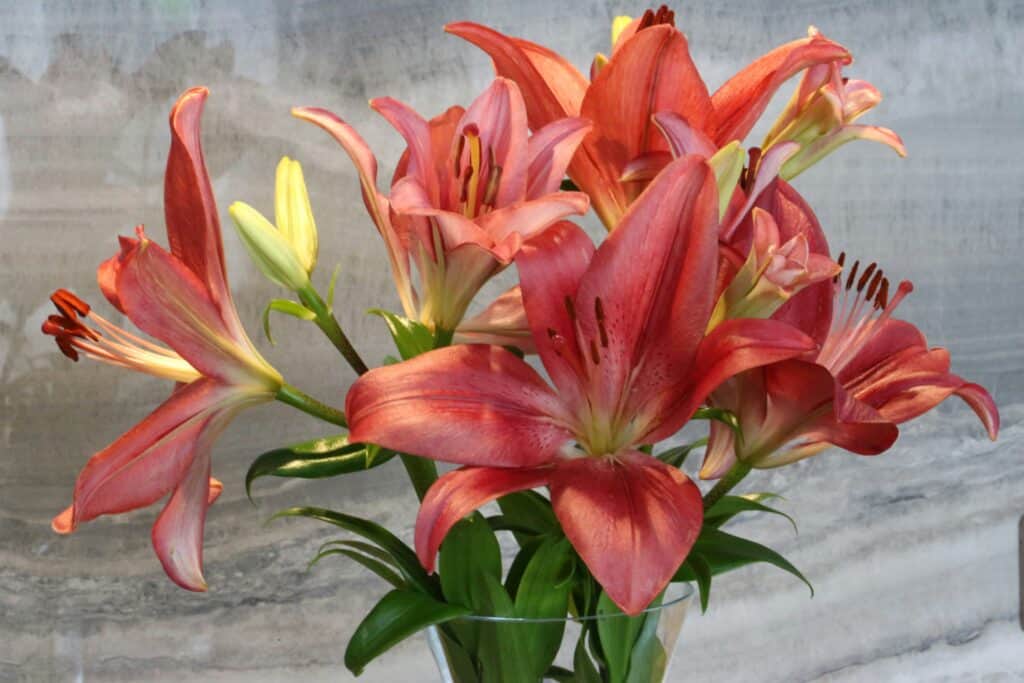
Each bloom from your daylily will only last one day. Deadhead (remove the dead blooms) daily with a flower snip or pinch them off with your fingers. Once all the buds on a single stem have bloomed, cut the entire stem down from the base.
You can leave some of the deadheads if you want seed pods to form. The typical way to propagate lilies is by dividing from the roots, but you can grow them from seed, too! One thing to note is that allowing seed pods to form might reduce the amount of blooms you get from the plant the following year.
When your daylilies are done blooming for the season, clear out any dead foliage and add it to your compost pile.
More from the Garden
- How to Remove Rust from Garden Tools
- How to Tell if Old Garden Seeds Will Germinate
- Ruth Stout No-Work Gardening Method
Sources
- The Daylily: A Guide for gardeners by John P. Peat and Ted L. Petit
- Growing Perennials in Cold Climates by Mike Heger, Debbie Lonnee, and John Whitman
- Iowa State University Extension