How Much Do Nigerian Dwarf Goats Cost? (Pricing and Upkeep)
How much should you expect to pay for a Nigerian Dwarf goat? That depends on several factors and the cost of their upkeep should be considered as well.
About the Nigerian Dwarf Breed
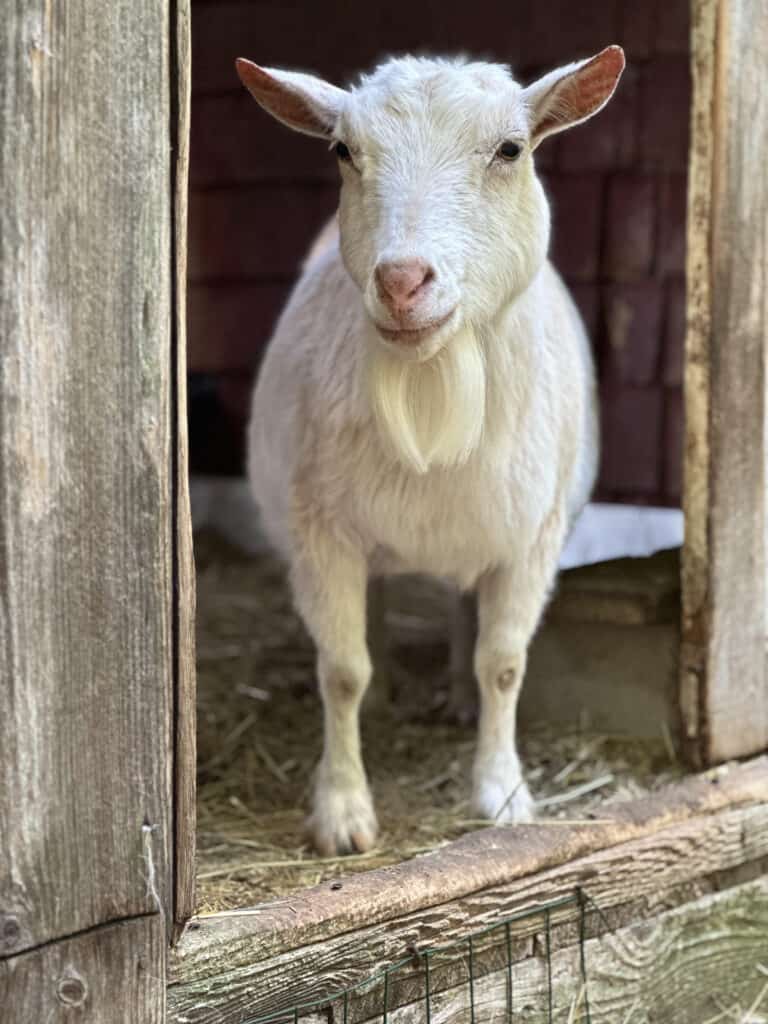
One of the smallest goat breeds, Nigerian Dwarf goats are incredibly popular for their friendly nature, high-quality milk, and general hardiness. They are a favorite for homesteads both large and small as a few goats can easily provide milk for a family as well as being dual-purpose for meat. Their short stature also makes them easier to fence and gentler for families with children to handle.
How Much Do Nigerian Dwarf Goats Cost to Buy?
There is no straightforward answer to this question, because a good price for a Nigerian Dwarf goat will change based on several factors. These include the age of the goat, the sex of the goat, how old they are, if they are pregnant, whether they are registered or not, your geographic location, and any general health conditions they might have. Let’s break down each of these topics and give you an estimate of how much you can expect to pay for a Nigerian Dwarf goat.
Registered Nigerian Dwarf vs. Grade
This is likely going to be the biggest cost difference aside from the sex of your goat. Registered Nigerian Dwarf goats will run anywhere between $450-$1000+ depending on their genetics and gender.
A registered goat means they are, or can be registered with various breed registries. This might include the American Dairy Goat Association, the Miniature Dairy Goat Association, and so forth. Registered animals must come from other registered stock that meet specific breed guidelines.
Unregistered goats that are not eligible for any kind of purebred registry, are sometimes also known as “grade”. This means they come from Nigerian Dwarf genetics, but their ancestors did not meet specific breed standards to qualify for registration, or possibly whoever owned them simply did not register them.
Even though registered animals can fetch a higher price, they aren’t necessarily the best when it comes to high-quality milk production, so don’t let registration status stop you unless you plan to have a registered herd yourself. An unregistered Nigerian Dwarf will likely cost between $250-500 depending on other factors.
Bred vs. Unbred Does
If you are buying a bred doe, you can expect the price to be higher as you are actually getting a two-for-one (or very likely three-for-one when it comes to Nigerians) deal. Whatever the price of the goat is in general, you can estimate another $2-300 tacked onto the base price. For example, if most of this farm’s doelings (immature females) are selling for $500, you can expect a bred doe to sell for at least $7-800 if not more.
In-Milk vs. Dry
A goat who is in milk will always sell for higher than a doe who is dried down, meaning she is currently not producing milk. A goat who is not bred and not currently in milk, will sell for much less than a goat who is either pregnant or currently milking a decent amount.
Pet Wethers
Because they are so cute and small, Nigerian goats, as well as their cousins pygmy goats, are very often purchased to be kept as pets. The best candidate for these pets are wethers. These are male goats that have been castrated, so they will not be able to breed or develop other buck characteristics such as rutting, getting that smelly musk, and so on.
Speaking of bucks, some goat owners like to keep wether companions for their bucks. Again, goats are herd animals and are happiest with company. Wether companions are a great option to keep with a breeding buck.
Pet wethers will cost you anywhere between $0 to $125.
Bottle Babies
Nigerian Dwarf goats are famous for having multiples when kidding, and sometimes people are looking to rehome a young goat as a bottle baby. This is simply because the mom only makes so much milk and might not be able to keep up with all her kids.
A bottle baby will need to be fed several times a day until they are old enough to wean. The same as pet wethers, they will typically run you between $0-$175 depending on their sex and if they are registered or not.
Before You Buy Your Goat
There are a lot of things you should have prepped on your end before you bring your goat home, but even beyond the physical preparations it is worth bringing up a few important rules you should follow when buying a dairy goat.
First, don’t ever give someone a down payment on a goat. Scams abound in the livestock world and putting down money on a goat or paying some sort of reservation fee is not advised. The only exception to his would be if they are a very well-known and reputable breeder.
Those who have goats in demand often times will have a waiting list and it is not uncommon for them to request a certain amount of cash down to hold your place. You should always get a receipt for this and the terms of the agreement.
Next, make sure your goat is disease tested and has come back negative for CAE, CL and Johnes disease at a minimum. These diseases have no cure and can spread easily to other goats and livestock. It is common practice for goat owners to regularly test their herds for these specific ones. You should get copies of the negative test results, and a follow up phone call to the testing lab or veterinarian to confirm isn’t a bad idea either. Unfortunately, people can and do falsify paperwork.
What is the Cost of Keeping a Nigerian Dwarf Goat?
First of all, goats are herd animals and if you have one goat, you should truly have at least one other goat to keep it company. Because of this we should plan your goat budget based on two goats at a minimum rather than one.
We will also calculate these costs on an annual basis, but the month-to-month cost of goat care can vary quite a bit. At the very end we’ll total up the cost of getting started with two Nigerian Dwarf goats for one full year.
Veterinary Care
This one can vary a lot too, of course, depending on how healthy your goat is. Our vet comes out usually once a year to handle disbudding because I absolutely hate doing it.
Just for him to come out to the farm is $70. Basic disbudding costs $15 per goat (that’s with some painkillers and a numbing shot). We’ve managed essentially to get by with just the one vet visit each year, but if your goat gets seriously sick or injured you can expect that bill to go up.
It is not considered a good practice anymore to give dewormers on a set schedule, so you will either need to bring fecal samples in to a vet a few times a year ($25 at our local veterinarian) or invest in a microscope and learn how to run fecals yourself.
Running a fecal means checking the goat’s poop to see how many worms are living in their digestive system. You will likely always see some, but they shouldn’t have too many. If you go the vet route, plan on spending at least $100 a year on running fecals. If you invest in your own microscope and testing kit that is a one time cost of around $200.
Hay, Feed, and Minerals
Hay costs are also hard to pin down, as this varies hugely by where you live and if you are currently in a drought or not. Where we live in rural Minnesota, I can get a square bale of good quality hay that weighs 60 lbs for $5-8 depending on the year. In other parts of the country I have seen folks pay as much as $25 for the same bale!
For argument’s sake, let’s go on the higher end of my area and say a square bale that weighs 60 lbs will cost you $8.
A Nigerian Dwarf will eat around 2-4 lbs of hay each day. Remember, your goat needs a buddy, so let’s say you have two goats. On the higher end, that is 8 lbs of hay each day. That means one bale will last you about one week, which would equal $32 a month in hay costs, or about $384 per year.
Many goats will do well on just hay, but some do need grain for a little extra boost, especially milking mamas. Even still, they will only eat about 1-2 cups of grain. A bag of goat feed will run you about $15 for a fifty-pound bag. For your two goats, that will last at least fifty days. That totals to about $110 per year on feed.
Goats also need access to free-choice minerals. Based on my experience, this will run you about $50 each year.

Milking Supplies
If you are brand new to keeping dairy goats, you will need a stainless steel bucket, strainer, cleaning solution, filters, and so forth. You can get all of these things for around $100.
Shelter
If you do not already have a shelter established for your goats, you will need to build or buy one. Because they are one of the smallest goat breeds, you can make a fairly simple goat shelter that doesn’t cost much. There are several YouTube channels (including mine!) that have low cost plans for building goat shelters. The shelter can be as simple and affordable as you can scrounge up, or it can be a premade animal shelter for several thousand dollars.
They key elements your shelter should provide are a place to get out of the wind and rain, as well as good ventilation, especially in the winter.
Let’s assume you are on the thriftier side of things, and we’ll put your shelter at $250 (though the price range could really be as low as you can make it and up to $4,500 or more).
Where to Buy a Nigerian Dwarf Goat
You aren’t likely to see a Nigerian Dwarf goat at the sale barn, so like with the other mini breeds you will have to look to independent sellers to find your goat.
Craigslist is an option, as well as Googling “Nigerian Dwarf Goats for Sale” and your state. That is a good way to find a reputable farm that has put time and effort into their breeding program. Another good option is Facebook.
Most states/regions have one or more homesteading groups where you can buy and sell animals. There are also often dairy goat groups on Facebook where you can find goats in your area.
The Total Annual Cost for Keeping a Nigerian Dwarf Goat
Alright, so what does this all add up to? Let’s assume you buy two female Nigerian Dwarf goats who are registered, one that is in milk and the other who is bred.
If you are starting from scratch and need all the things (shelter, milk supplies, etc.) you are looking to spend around $1,000 in your first year on set up, hay, vet costs, minerals, etc. plus the cost of buying your goats, which would be on the lower end around $1200. This cost does not include fencing at all, which again is going to have extremely varied costs depending on the kind of fence you get.
To start from scratch with Nigerian Dwarf goats will cost you about $2200 in the first year, then around $6-800 per year thereafter in upkeep.