The Best Black Sheep Breeds for Homesteads
Whether for their black fiber or just because you like the look of them, there are several black sheep breeds that might be a good fit for your farm or homestead.
Best Black Sheep Breeds
There are several sheep that are all black or will have large amounts of black along with other color. Which breed you choose will depend on your goals for your flock.
The first determining factor is if you are looking for meat, fiber, milk or all three. It’s also important to take into consideration other qualities such as mothering ability, suitability to your climate and farm, etc. We’ll talk more about that down below, but for now let’s dive into the different breeds!
One last note, there are few breeds of sheep that are truly all black all the time. In addition to those, I have listed multi-colored breeds that include black, as well as breeds where all black sheep can occur in certain bloodlines.
1. Barbados Black Belly
This sheep isn’t strictly a black sheep, but has an entirely black underbelly as well as black points on its face. This is a hair sheep, which means its wool will naturally fall off and does not need to bed shorn. It is used for meat and dairy and comes originally from Barbados, though there is an American Blackbelly as well. If you live in hot climates, this sheep might be a good option for you as it is very resistant to heat stress. This breed is also known for producing several lambs at a time, most often having twins or triplets.
2. Black Welsh Mountain Sheep
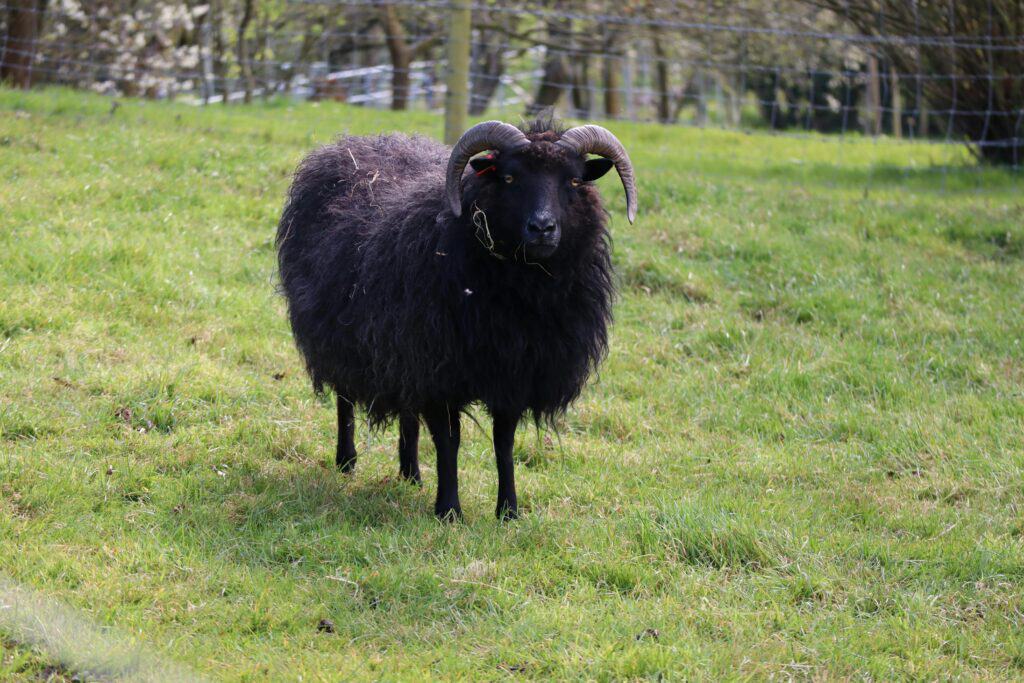
I was lucky enough to spend an entire lambing season working with this small and beautiful breed of sheep! Black Welsh Mountain sheep will provide you with black wool and also delicious meat. One benefit of this sheep is that they maintain their dark wool color even as they age, whereas some breeds start to grey. They are a very hardy sheep, with their origins dating all the way back to the middle ages! If you have rough or hilly pastures, this ancient breed might be the right choice for you as they are known for thriving on rough terrain. Another quality of note, they are regarded as excellent mothers and very often have twins. While their fiber isn’t often used for mass production, it is used and enjoyed by hand spinners.
3. Border Leicester
Unlike its cousin the bluefaced leicester, the Border Leicester (pronounced “lester”) can come in white, silver, and black. You are most likely to find white ones, but if you search around you can find all blacks. If you’ve ever seen the movie, “Babe”, this is the breed that Farmer Hogget keeps. They are known to be dual purpose as both a fiber and meat breed. Their fleece provides a generously long staple length and is often used by hand spinners. They are known for having high milk production but aren’t often used as a dairy breed. You can expect twin lambs from these girls, who are also often noted to have a gentle temperament. I worked at a farm with a few of these and even their ram was a kind gentleman.
4. California Variegated Mutant (Romeldale)
Who doesn’t want a sheep with mutant in the name? In all seriousness, this breed was developed in the United States back in the 1960s by a California Shepherd named Glen Eidman. He selected for a “badger” color pattern face. Considered a composite breed, it is a combination of the Romney and Rambouillet. This is another breed that will vary in its color, from grey to black and even brown spotted. It is listed as endangered by the American Livestock Breeds Conservancy, so getting a hold of and maintaining this breed will take a little extra effort.
5. Clun Forest
This is another sheep that is sort of sneaking on this list, a they have white bodies with black faces and black legs. They are a medium bodied sheep that are known for their longevity and adaptability. They are also ranked among the “excellent mothers” on our list, being very attentive and producing plenty of milk. While they aren’t specifically listed as a dairy breed most places, they would be suited to milk production on a homestead scale.
One thing I love about this breed, is that its breed assosciation does not allow them to be shown competetively. They put more emphasis on their production qualities over their phyiscal appearance, and don’t want the breed development to suffer because of people trying to win ribbons at shows. Their main emphasis is a sheep that produces well on pasture
6. Corriedale
This breed was developed in New Zealand and Australia where Lincolns and Merinos were crossed to produce the Corriedale. They do very well on just pasture, with the lambs growing quickly and producing a very tasty meat. Because they are widely adapted to a variety of climates and pastures, they are currently one of the most popular sheep breeds across the world. Corriedales are medium to large depending on their genetics, and their fiber is soft and thick, making it a great choice for those new to handspinning.
7. Dorper
Admittedly, this sheep has an all white body and an all black head. We had a dorper ram at our home for a while and he was a very easy keeper. They are one of the breeds of hair sheep on the list, meaning they do not require shearing and simply shed out their coats. If meat production is your goal, Dorpers might be the way to go! They breed year round and produce a very hefty, meaty carcass. They do well in hot or cold climates and the lambs mature quickly to butcher weight.
8. Finnsheep
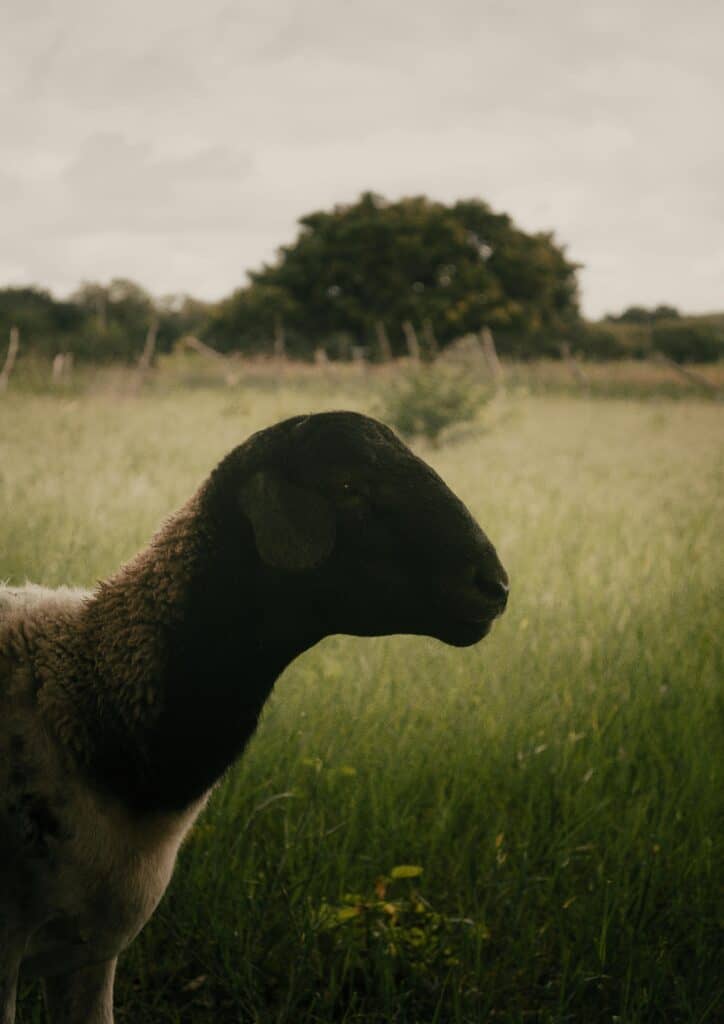
Finnsheep have the distinction of being used for meat, fiber, and dairy! They are of a medium build and can come in white, black, pied, brown gray, or tan. This sheep is well known for having multiple lambs, with the average being three or four, each year. Though having anywhere from two to eight isn’t out of the question! With that being said, if you raise this sheep you can expect to be bottle feeding at least a couple of lambs every year. They produce a light fleece with a three to six inch staple length. As mothers they are very attentive and surprisingly lamb without assistance most of the time.
9. Hampshire
These are another breed on the list where you will find them mostly with a darker white fleece, and the occasional all black thrown in the mix. They are very popular as a 4-H animal because these gentle giants are one of the more docile breeds. As can be the issue with larger animals, they might require more assistance with lambing than others on our list. Because of their large body size and copious meat production, they will need excellent forage and potential grain supplementation to maintain their condition. Their fleece is more suited to commercial production than niche markets.
10. Hog Island
You might be hard pressed to find this breed available for purchase because it is considered in critical condition by the American Livestock Association. They have an intersting history, being developed on Hog Island off the coast of Virginia. In this isolation, the breed actually became feral when humans abandoned it after a 1933 hurricane. The breed survived after being relocated to historic sites and shepherds keen on maintaining the breed. This is a more wild, rugged breed, but that being said they lamb easily and look after themselves on even sparse pastures. In terms of color, only aout 10% of the breed is all black, making an all black flock of Hog Island sheep a definite rarity.
11. Icelandic
The trifecta of sheep, the Icelandic can be used for meat, fiber, and milk! They are extremely popular on small homesteads and are a great choice for those looking to be more self sustainable. Icelandics are famous for producing excellent quality wool for handspinning. They produce an inner coat that is up to three inches long, and an outer coat that can reach up to eighteen inches long!
They are well adapted to cold climates and can manage fine in more moderate conditions. However, as they get further south where parasites are not regularly killed off by winters, they might struggle somewhat with parasite loads so do keep that in mind. Small and heavy producers, they can have several lambs at a time and often do well raising two to three at a time. Their small lambs grow quickly and do well on just pasture. Their wool can come in a variety of colors from, white, grey, brown, or black. You will need to breed selectively to achieve your all black flock.
12. Jacob
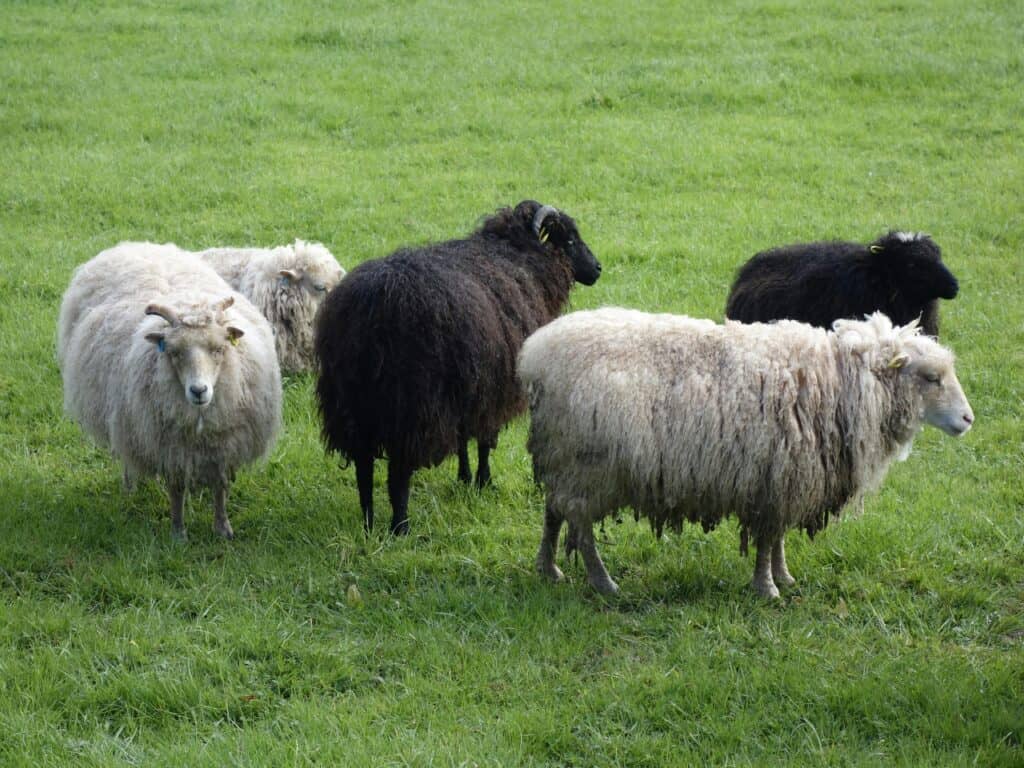
Another one of the impressive double horned breeds, Jacobs are also known for their mixture of hair colors coming typically in white and brown spots, though they can also be black and white spotted. Their fleece has a four to seven inch staple and like the Navajo-Churro, it does not produce much lanolin due to the breed’s more arid origins.
13. Karakul
Originating in Central Asia, this is one of the most ancient sheep breeds still alive today. Their exact origins aren’t known, but signs of this particular breed have been found dating back to 3000 BCE. They typically have just one lamb but twins isn’t too uncommon. They are a double coated breed, and their undercoat sheds out naturally in the spring. Their fleeces are typically black or red, but they will change more to a grey or reddish brown as they mature. Their lambs mature more slowly than some other breeds, but their meat is very delicious.
14. Lincoln Long Wool
With prolific fleeces that often require twice a year shearing, the Lincoln is an excellent choice for someone wanting to keep a small, personal flock for producing fiber. They are well known for being docile and easy keepers, almost too easy with obesity being an issue if their feed becomes too rich. It is one of the largest breeds but is of course a gentle giant. Most of this breed are likely to be white, but there is of course variety depending on the genetics. You can also find Lincolns in silver or black.
15. Montadale
Most Montadales you will find are white, so this is another breed you will need to seek out black strains specifically. They are a meat and fiber breed that are known for fast growth. They adapt well to hot or cold climates. Their fleeces are fine, but not the best for handspinning. If you are looking for a quick growth rate to produce plenty of excellent, lamb, this is your breed.
16. Navajo-Churro
You won’t find a wilder looking sheep than this breed. With a distinctive set of double horns and a long shaggy coat, it’s hard to miss a Navajo-Churro. Their breed was almost wiped away completely when the U.S. army killed thousands of them during the 1800s as retribution against the Navajo nation. It performs very well in hot climates and has a double coat. The outer being course and long with the inner coat having five to six inch fibers. They are very protective mothers and yield an excellent, mild mutton flavor.
17. Newfoundland
Very similar in appearance to Shetlands (which we cover in a minute) the Newfoundland can come in a variety of colors so you will need to seek out a black strain specifically if that is the goal for your sheep flock. Coming from a hard scrape origins on the islands of Newfoundland, they are known for producing a dense fleece and doing well on poor pastures.
18. Shetland
If you are looking for a hardy little sheep that is great for beginners, consider getting the shetland! They are a small, dual purpose breed used for both meat and fiber. The rams are known for having rather attractive horns with a majestic curl, the females known to be good mothers who lamb easily. Shetlands are a perfect small farm sheep, with a delicious meat and fiber that is great for spinning.
19. Wensleydale
Considered a larger breed, all registered Wensleydales can be traced back to one original ram in the early 1800s! If fleece is your goal, then this might be your sheep! They produce the heaviest fleece fo any of the North American Breeds (up to twenty pounds!) which can be up to twelve inches in length. They are also known to be very good mothers who manage twins and triplets with ease. The fleeces can come in many different colors from white and gray to black or brown.
Selecting Your Perfect Black Breed of Sheep
As I mentioned up above, there are various determining factors when it comes to selecting among the black breeds for for your flock. Let’s dive deeper into each of those topics to make sure you get the right breed for you.
Size
This can be a big determing factor, especially if you plan to have children assist with raising the sheep. Small sheep are easier for children and even adults to manage when it comes to shearing, veterinary care, etc. They also require less space in general than some of the larger breeds. Another benefit to these sheep is that they do not eat as much as a larger sheep, which will keep your feed bill down.
Larger breeds have the benefit of producing more wool and meat. You also have more flexibility with larger breeds in term of what other breeds you cross them with. Larger females can be bred to males of a similar size or smaller. Whereas with small breeds, they should only be bred to other small breeds to avoid lambing problems.
Temperament
Some breeds are known to be more docile and easier to manage, while others can be a little more on the feral side. If you are going to be up close and personal with your sheep, consider finding a more docile breed.
Adaptability to Your Climate
Sheep in general are known to adapt well to most climates and terrains, even rugged ones. However, some of these breeds come from the subtropics and will perform well in the hottest of environments. Most wool sheep will do fine in cold climates.
Wool and Meat Quality
A few of the sheep listed above are hair sheep, meaning they shed out their coats instead of requiring shearing. Some have wool that you might be able to sell commericially, but most are going do be favored by more niche markets like hand spinners and fiber artists. Additionally, some breeds are known for premium quality meat, while some of the more traditional breeds might produce a meat that is a little on the gamier side unless their diet is managed very carefully.
Availability to You
Some of these breeds listed sound very appealing, but there simply might not be any within a reasonable distance to you. This is imporant for a few reasons. First, getting the sheep to begin with can be costly and time consuming. Second, as you continue to develop your flock you will have to bring in a new breeding ram. This means you will have to track down a ram that meets your flock needs wherever he may be, and get him safely home.
I wholeheartedly support folks wanting to work with endangerd or threatened breeds, and of course want you to raise the sheep your heart loves the most. Just keep logistics in practicality in mind before you commit to whichever breed you decide to bring home.
More from the Farmyard
- How to Fix a Leaky Stock Tank
- How Much Does a Nigerian Dwarf Goats Cost?
- Is Food Grade Plastic Safe for Raw Milk?
- Best Winter Hardy Chickens for Cold Climates
Sources
- Storey’s Illustrated Breed Guide to Sheep, Goats, Cattle, and Pigs by Carol Ekarius
- British Sheep Breeds by Elizabeth Henson