How to Brew Red Raspberry Leaf Tea (Hot or Iced)
Red raspberry leaf tea is a wonderful tonic for women’s health, especially during pregnancy. Here are several ways you can brew and use this herbal drink!

Why Raspberry Leaf Tea?
Raspberry leaves have a long history of use as a health tonic for women’s and even men’s health. The leaves are a good source of calcium, iron, niacin, vitamin C, and manganese. All of these vitamins and minerals have a toning effect on both the urinary and reproductive systems of men and women.
This is why red raspberry leaves are so often used by pregnant women in their third trimester, as the traditional use of the tea has been to encourage and strengthen uterine contractions for labor.
During menstruation, the tea can help to reduce the length of your period, reduce bleeding, and in general give your whole system a good boost of much needed nutrients during a draining time.
Technically, raspberry tea isn’t actually a regular tea but an herbal infusion! And no, you don’t have to use red varieties, any variety of raspberry leaves have great benefits.
Disclaimer: This article should not be taken as medical advice. Before utilizing any herbal tea, please consult with your health provider, especially if you are pregnant or nursing.
How Much Raspberry Leaf Tea Should I Drink?
This one is going to vary depending on your own personal circumstances. If you are utilizing the tea for menstrual support, 2-4 cups of tea a day beginning a day or two before your expected period and throughout the next few days is recommended. Start with 1-2 cups and see how you feel, then increase if you’d like to.
If you are drinking the tea during pregnancy for uterine tone, it is generally recommended to start drinking the tea around 34 weeks along. It is not recommended in earlier pregnancy as you don’t want to encourage uterine contractions before your baby is full term or very close to it. Start with one cup of tea per day, then increase up to four cups once you reach full term of 39 weeks.
In my fourth pregnancy, I began drinking tea around the 36 week mark and went right to four cups (one quart) per day. I was blown away by the significant increase of braxton hicks contractions I started having, so I dialed back my consumption to just two cups each day. As I write this article I am between 38-39 weeks along, so I plan to increase my consumption by a cup in the coming days and see how I feel.
This post contains affiliate links, which means I make a small commission at no extra cost to you. See my full disclosure here.
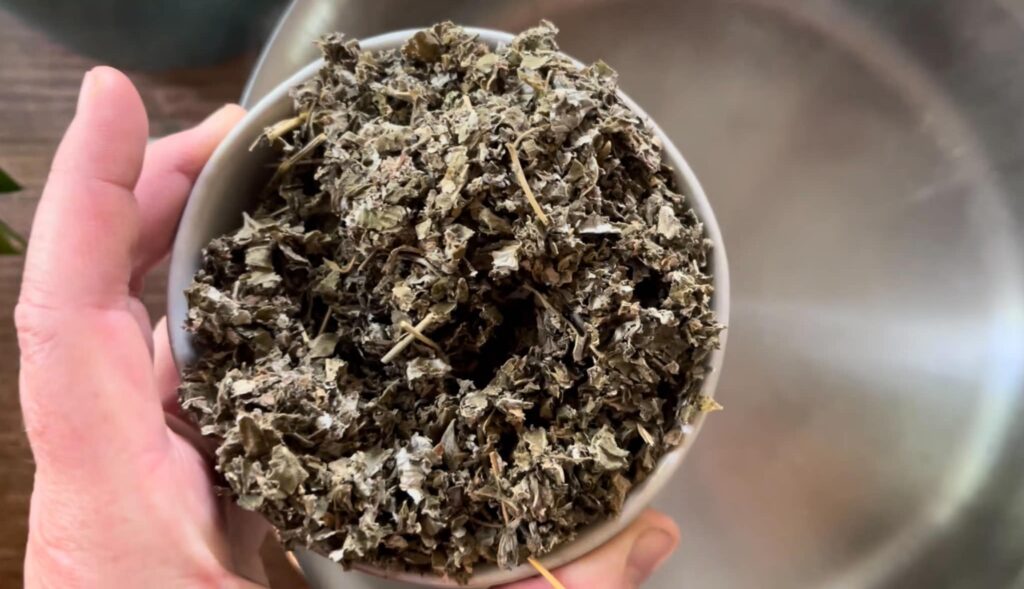
Methods of Brewing Raspberry Leaf Tea
There are many ways of brewing a raspberry leaf tea, all depending on if you want it hot, chilled, long infusion, or shorter infusion. Here’s a breakdown of your options.
Bulk Chilled
This is how I’ve been brewing my tea during this pregnancy, as drinking several cups of hot tea during the middle of August does not sound enjoyable to me. For this method, you will brew a large batch in bulk, then store it in the fridge up to 3-4 days.
Using a large stock pot, add one gallon, or sixteen cups of water. Bring this to a boil then turn off the heat.
Next, add one cup of dried raspberry leaves and stir up and down to help them submerge and sink into the water a little. Cover the pot with a lid and allow to steep for 5-10 minutes. I prefer a longer steep time myself, but if you find the flavor is a little too strong for you, you can always dial it back. The longer the leaves are in the water the stronger and eventually more bitter the flavor will become.
After your desired steep time, remove the tea leaves (I use a little sieve to scoop most of them out) cover again, and allow it to come to room temperature. It is important that we steep and allow the tea to cool while covered, because the volatile oils in the leaves will evaporate out in the steam.
After the tea has stopped steaming, I like to strain it through a cheesecloth-lined funnel and into half gallon mason jars for storing in the fridge. I also like using these mason jar lids for storing/pouring.
French Press or Tea Pot
If you would like to make hot tea in a French press or tea pot, you will add approximately one tablespoon of dried tea leaves per eight ounces of water. For a standard French press that makes about four cups of coffee, you would use four tablespoons of dried leaves. Simply add the leaves loose to the bottom of the press, add boiling water over top, and allow it to steep for 5-10 minutes before pressing and pouring.
For your tea pot, how you brew it will largely depend on how your pot works. Some work well with loose leaf tea and filter out the leaves while you pour. Others it is best to use several tea bags or a metal tea infuser to avoid pouring a big cup of mushy leaf tea. Regardless of how you choose to handle the leaves, you should stick with one tablespoon of dried leaves per eight ounces of water, and steep covered for 5-10 minutes.
Sun Tea
Sun tea is one of my favorite ways to enjoy tea in the summer. Essentially, you are using the gentle heat from the sun to slowly infuse water with the herbal properties of the raspberry leaf. I also find it to be a fun and unexpected pleasure to watch the color of the water slowly change and darken over the course of the day. I have a full article on brewing sun tea here.

Cold Infusion
Some herbalists prefer to use a cold infusion when making herbal teas as they claim it will extract the most vitamins and minerals from the herbs themselves. Some food safety folks are more leery of this method as you have wet leaves hanging around in water for an extended period which causes some concern in their minds.
To make a cold infusion, we will follow the same amounts but adjust our steep time and method slightly. To a half gallon mason jar, add 1/2 cup of dried red raspberry leaves. Cover the leaves with cold water and stir. Cap the jar and keep in in your fridge for 8-12 hours. Strain out the leaves and drink within 2-3 days.
Tea Bags
A final and simple option for making your tea is to pick up a box of tea bags or make your own! Simply add the tea bag to a mug of your choice, pour over boiling water, cover, and steep for 5-10 minutes. When the steeping is done, remove the tea bag and compost it or toss it. Super simple!
The biggest drawback to tea bags, however, is the cost. If you are brewing four cups of tea a day, you will burn through an entire box in no time. I prefer to buy a one pound bulk bag of leaves, then make big batches of iced tea or use a tea ball to make individual cups.
Using Fresh Leaves: Amounts and Cautions
You can use fresh or thoroughly dried leaves in brewing your tea.
If you plan to use fresh picked leaves that have not been dried at all, you will want around 8 of the smaller, new leaves. Don’t use the old giant leaves towards the bottom of the plant. Select newer leaves that will have more nutrition. They are also best when harvested in the spring, but you can certainly use the younger leaves any time the plant is green and growing.
There is a caution, however, about using fresh leaves. They should be harvested and used immediately and not allowed to wilt. According to Magic and Medicine of Plants as well as Alaska’s Wilderness Medicines, the wilted leaves can cause digestion issues. I have not been able to verify this elsewhere, but they state that the fungal activity in improperly dried leaves can cause issues with your blood naturally clotting and could lead to internal hemmorrhaging. These sources say this can also be an issue with strawberry, blackberry, and sweet clover leaves. The takeaway here is, use either very fresh or very dried leaves for your tea.

More for Mamas
Sources
- Herbs for Children’s Health as well as Herbal Healing for Men, by Rosemary Gladstar
- The Herbalist’s Way by Nancy and Michael Philips
- The National Library of Medicine